
The Hidden Struggle
Across the State of Maine and beyond, many organizations are navigating rapid change—growth, staffing transitions, and increasing demands. Recently, I partnered with a local leadership team that was talented and committed, but struggling beneath the surface.
-Meetings were polite, yet guarded.
-Decisions stalled.
-Accountability felt inconsistent.
-Frustrations went unspoken.
They didn’t lack capability. They lacked trust.
Clarity Through Assessment
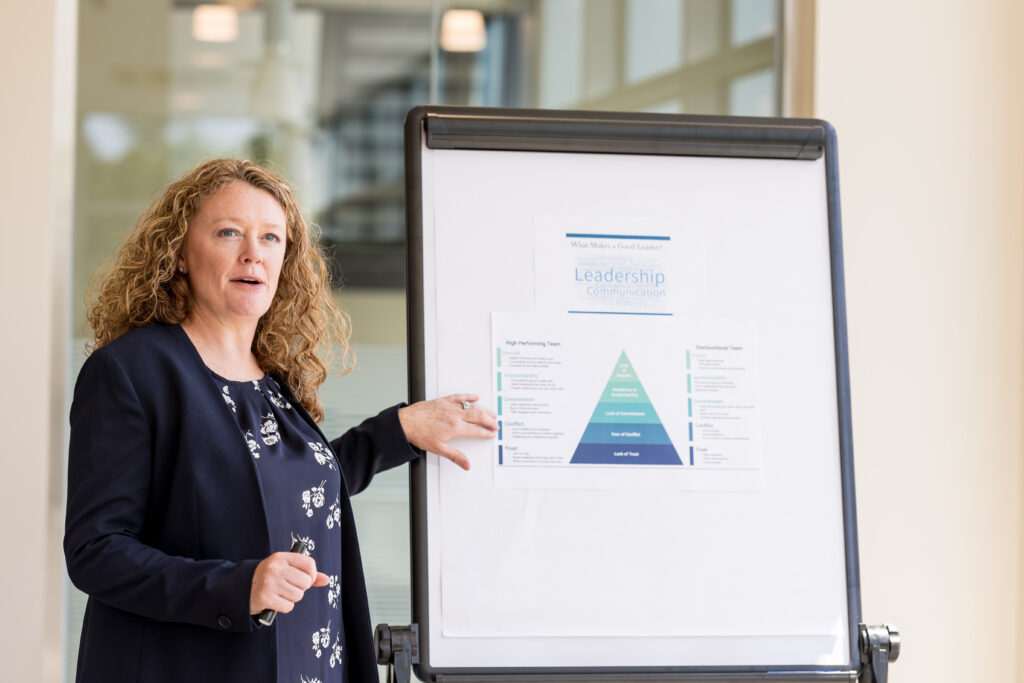
Using The Five Behaviors, we began rebuilding the foundation of how they worked together. The model, grounded in the work of Patrick Lencioni, focuses on five essential behaviors: trust, healthy conflict, commitment, accountability, and results.
The team assessment revealed patterns they had sensed but never fully addressed. Team members were hesitant to admit mistakes. Difficult conversations were avoided to “keep the peace.” Accountability happened privately instead of collectively. Individual priorities sometimes overshadowed shared outcomes.
The assessment didn’t assign blame. It created clarity.
Building Trust First
We started with vulnerability-based trust. Through guided dialogue, team members acknowledged blind spots, shared past missteps, and named where they needed support. As honesty increased, defensiveness decreased. Conversations deepened. Trust shifted from assumption to action.
From Avoidance to Healthy Conflict
Next, we reframed conflict. Instead of avoiding tension, the team practiced engaging in productive debate. They learned to challenge ideas without attacking people and to stay engaged when discussions became uncomfortable. Silence gave way to thoughtful disagreement. Healthy conflict replaced artificial harmony.
Strengthening Commitment and Accountability
As dialogue improved, commitment strengthened. Decisions became clearer. Expectations were named explicitly. Follow-through improved because everyone understood what had been agreed upon.
We then focused on peer accountability. Rather than relying solely on the team leader, members practiced respectfully holding one another accountable. The tone shifted from criticism to shared responsibility.
Aligning Around Results
Finally, we clarified collective results. The team aligned around what success truly looked like and how progress would be measured. Individual efforts connected directly to shared priorities.
Energy that had once been spent managing tension shifted toward meaningful impact.
Building High-Performing Teams
High-performing teams don’t develop by accident. They are built intentionally, with structure, courage, and commitment.
If your organization is experiencing stalled decisions, guarded conversations, or uneven accountability, contact us to learn how we can help you build a high-performing, connected team grounded in trust and shared results.